MCP Prompt Engineering Framework
The MCP Prompt Engineering Framework is a research-grade experimentation platform designed to systematically analyze and compare prompt engineering methodologies across leading large language models, including OpenAI’s ChatGPT and DeepSeek. Built with a FastAPI backend and a modern React frontend, the system implements the Model Context Protocol (MCP) to ensure standardized, reproducible, and scalable LLM interactions. The framework supports multimodal inputs such as financial documents and images, enabling rigorous A/B testing with both qualitative and quantitative evaluation metrics suitable for academic research and enterprise AI benchmarking.
Full-Stack Developer
Personal / Research Project
Overview
This platform delivers a complete end-to-end solution for designing, executing, and analyzing prompt engineering experiments. Users can create experiments, apply multiple prompting strategies, run them across different LLM providers, and evaluate results using standardized metrics. The architecture follows modern client-server best practices, leveraging asynchronous APIs, optimized database access, and interactive data visualizations to support scalable experimentation and reproducible research workflows.
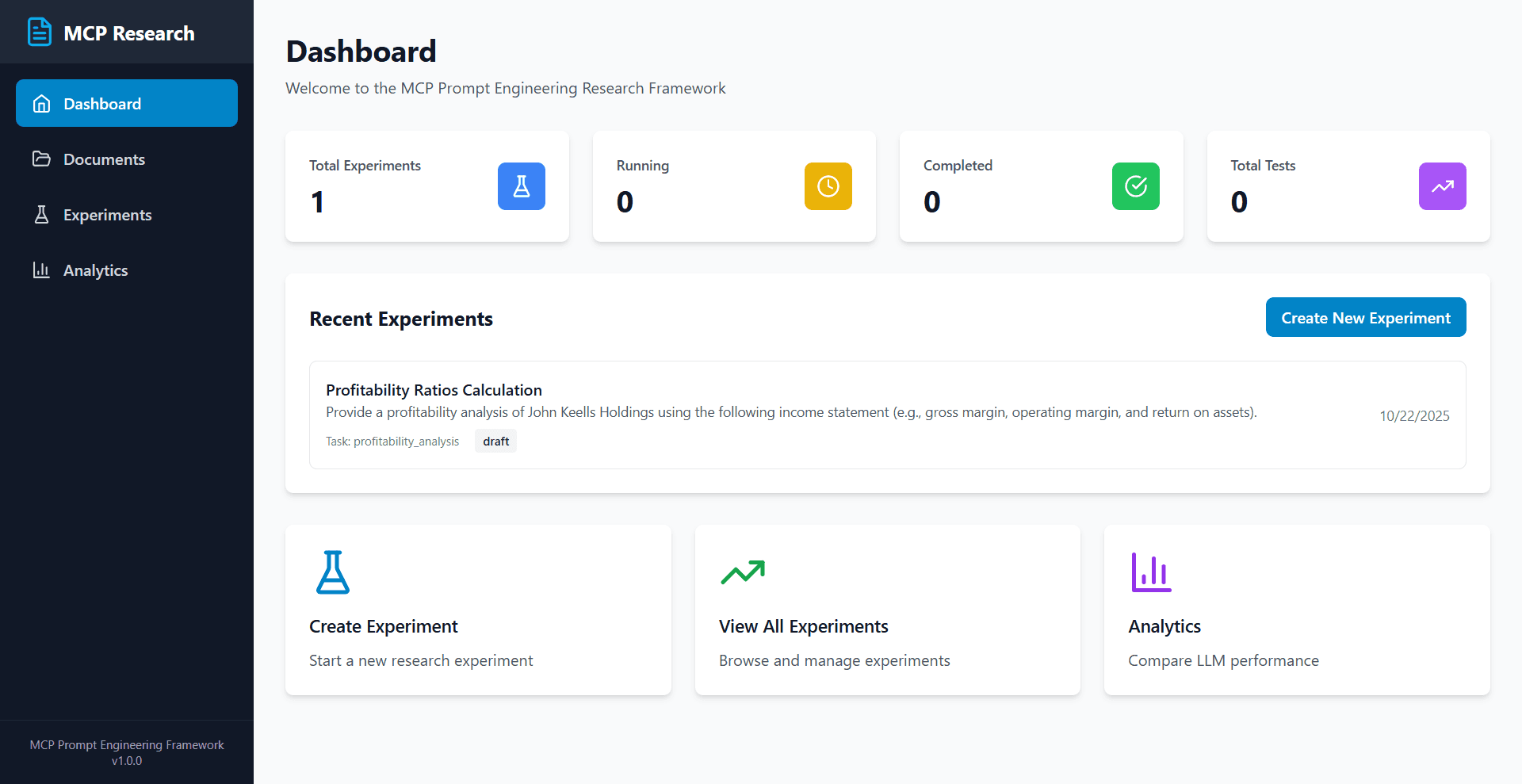
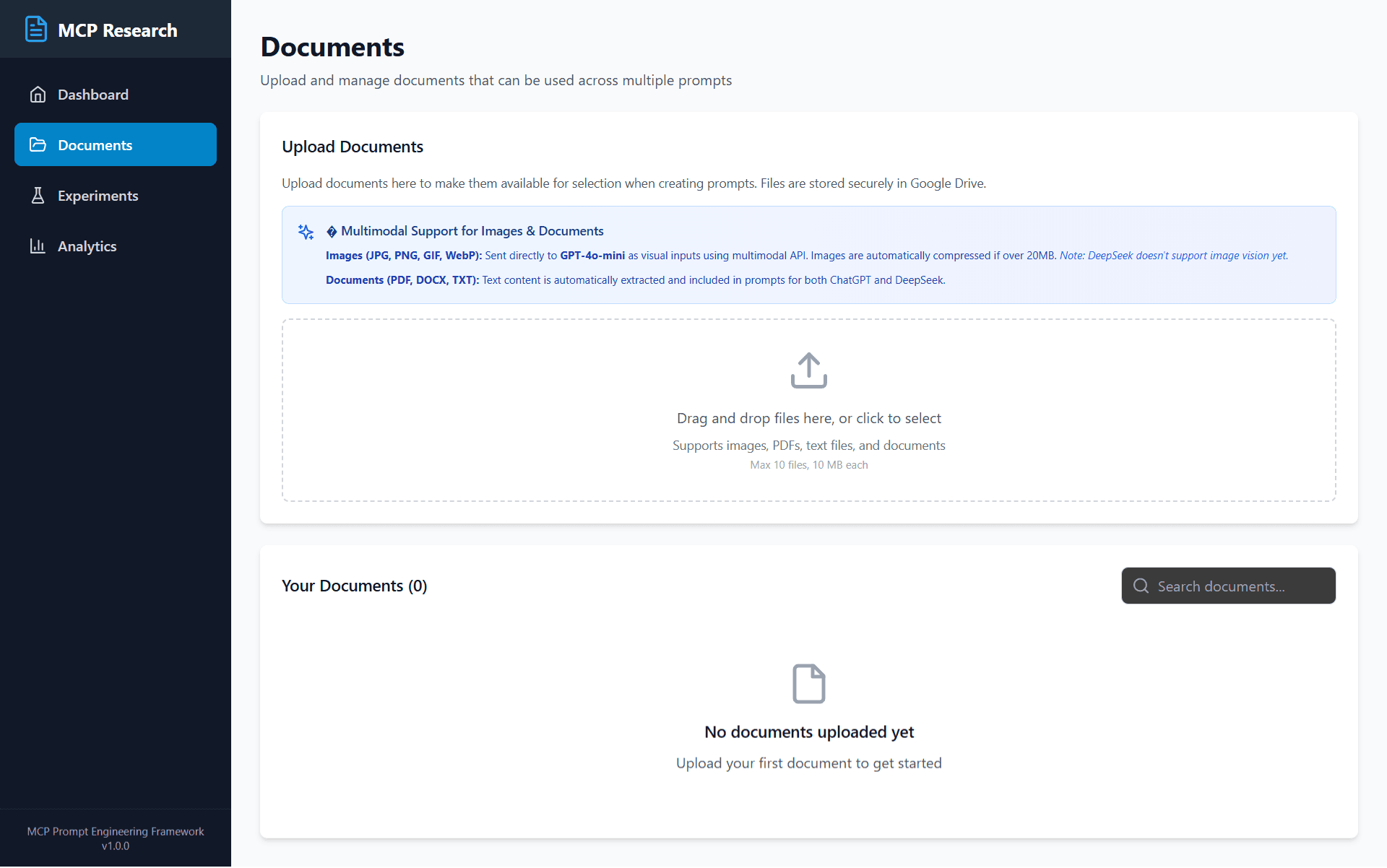
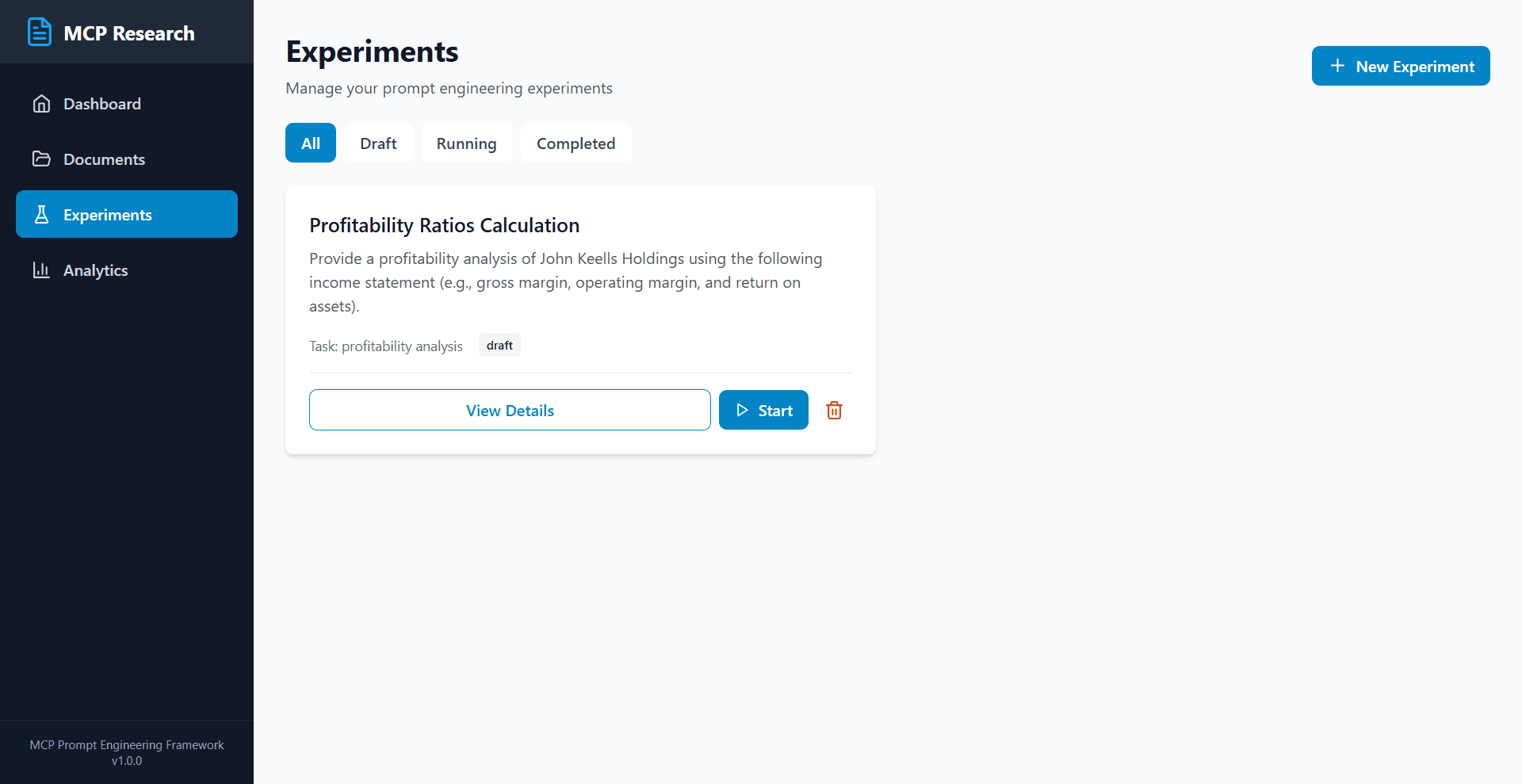
Design Screens


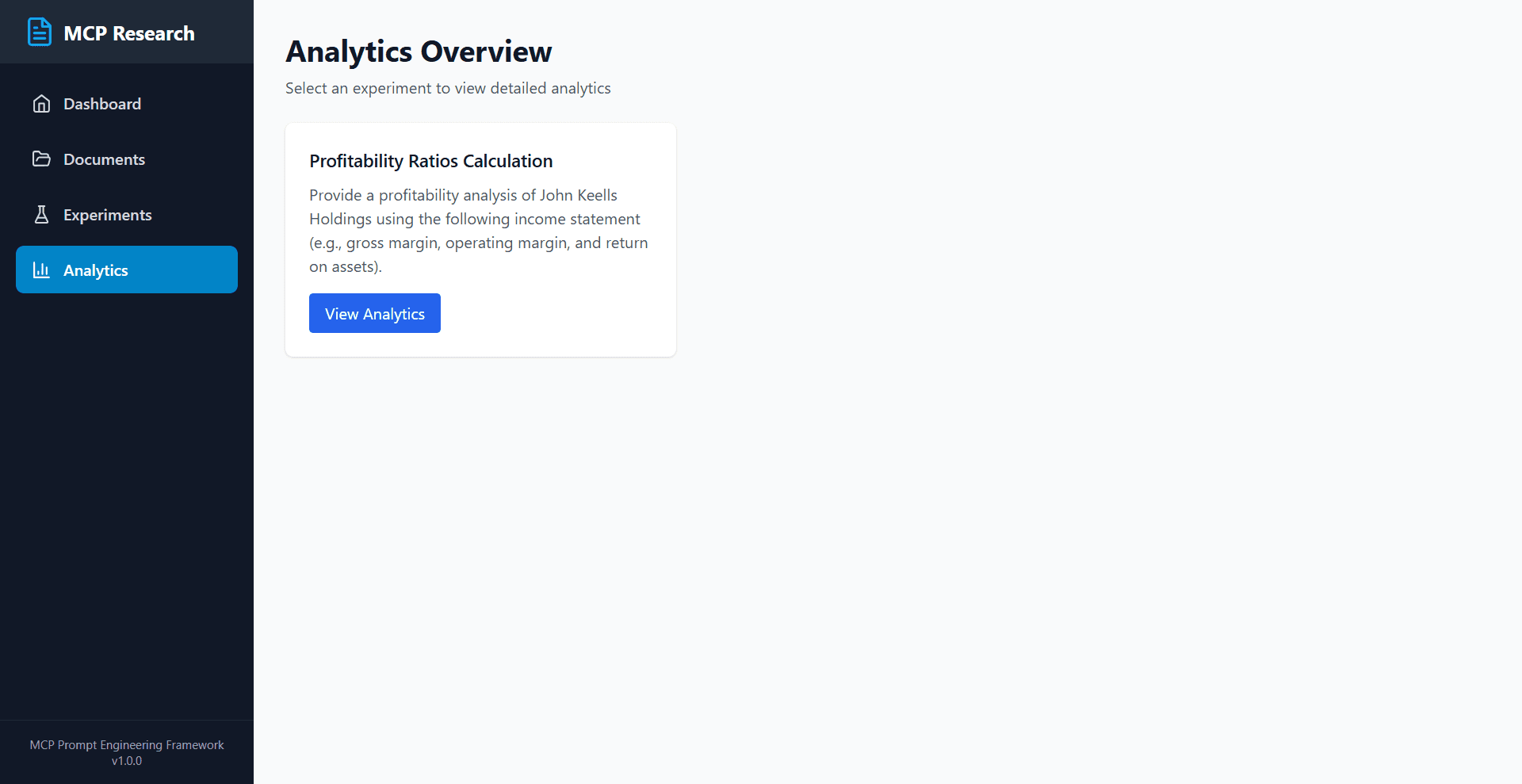
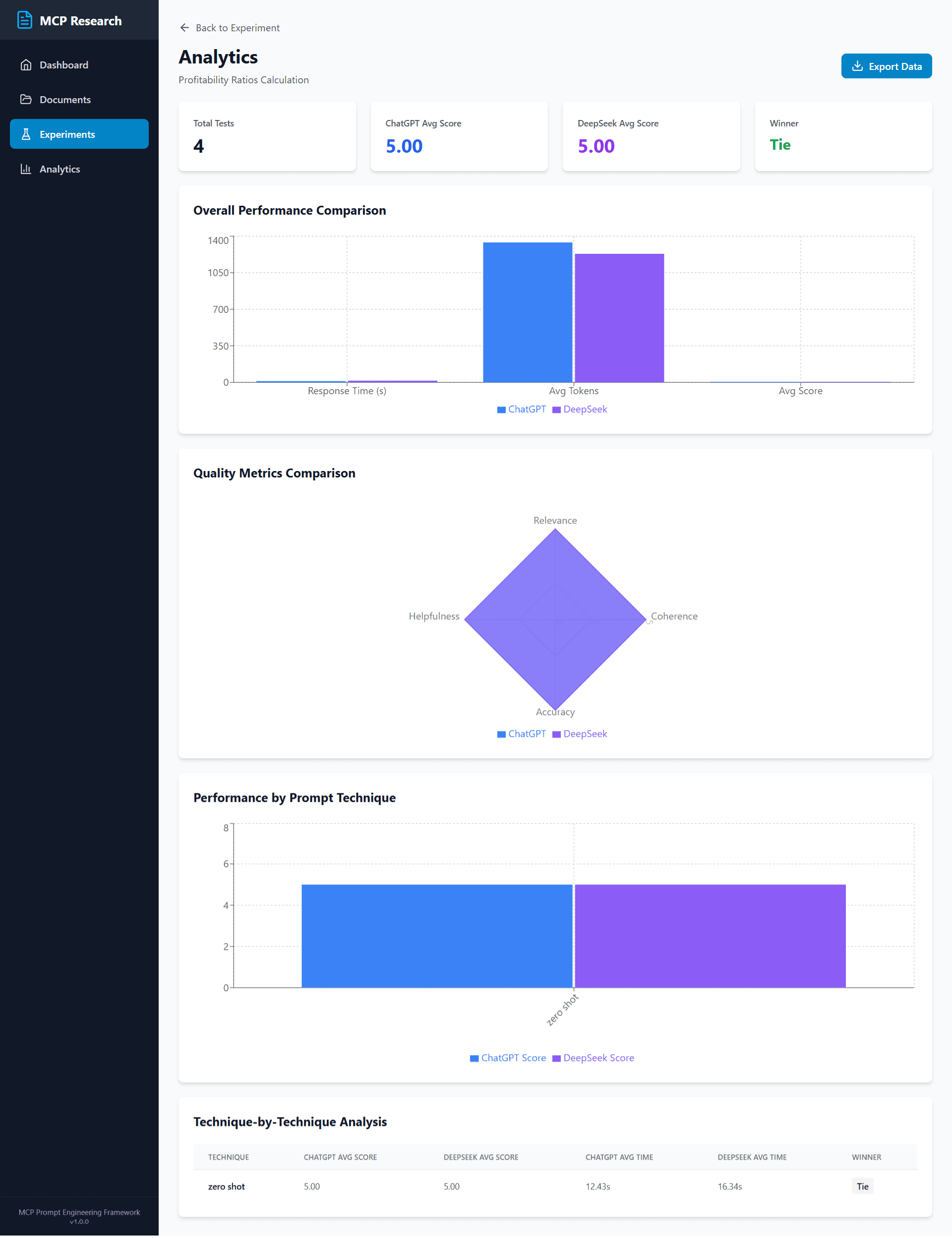
Tech Stack
- FastAPI
- Python
- PostgreSQL
- OpenAI SDK
- DeepSeek API
- React
- Tailwind CSS
- Node.js
Features
- •Model Context Protocol (MCP) Implementation: Standardized protocol layer ensuring consistent and reproducible LLM interactions across providers.
- •Multi-LLM Support: Execute experiments simultaneously on OpenAI ChatGPT and DeepSeek models with provider abstraction and fallback support.
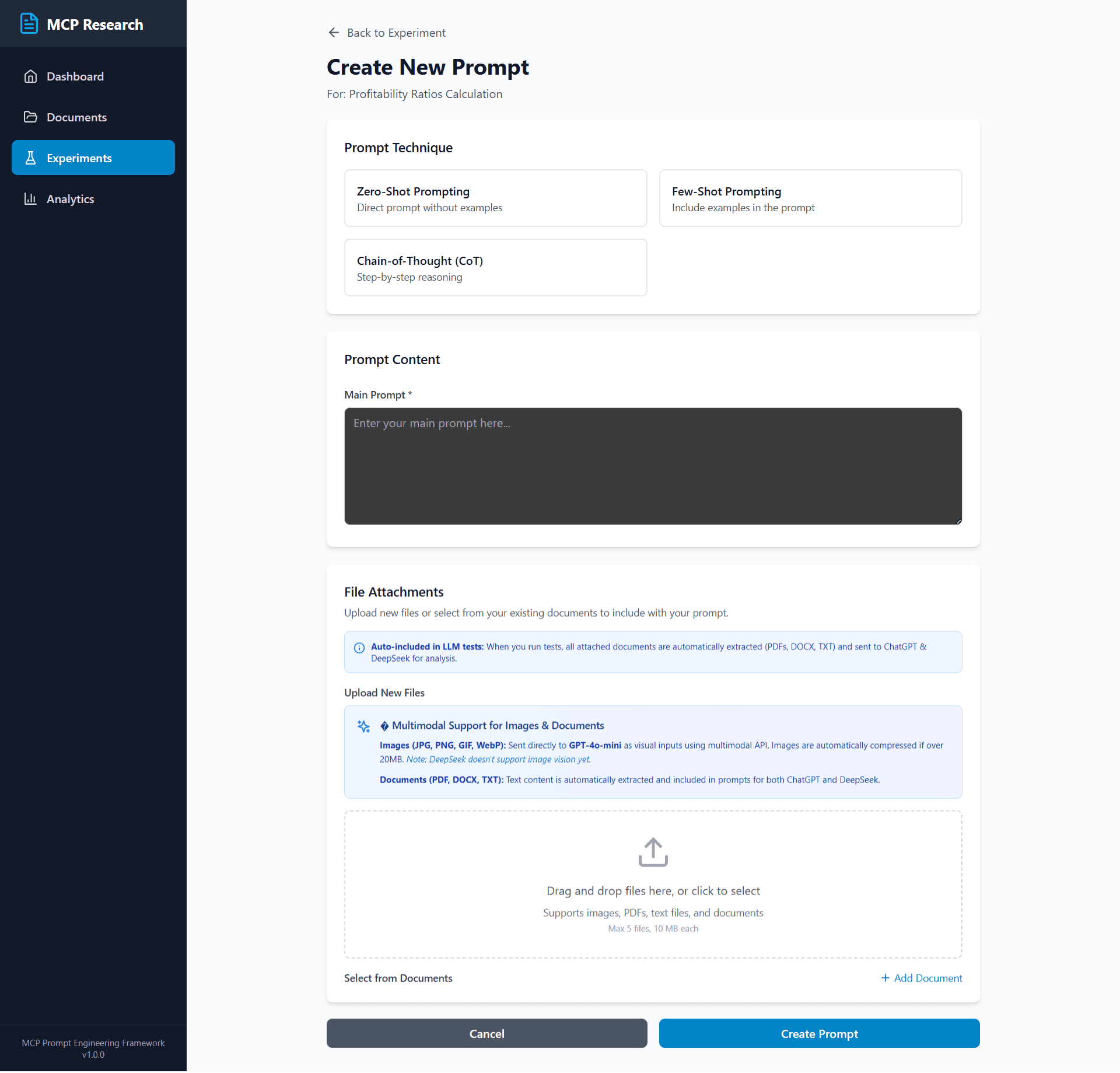
- •Prompt Engineering Techniques: Supports Zero-Shot, Few-Shot, Chain-of-Thought (CoT), Tree-of-Thought (ToT), Self-Consistency, Role-Based Prompting, Context Enhancement, and Prompt Chaining.
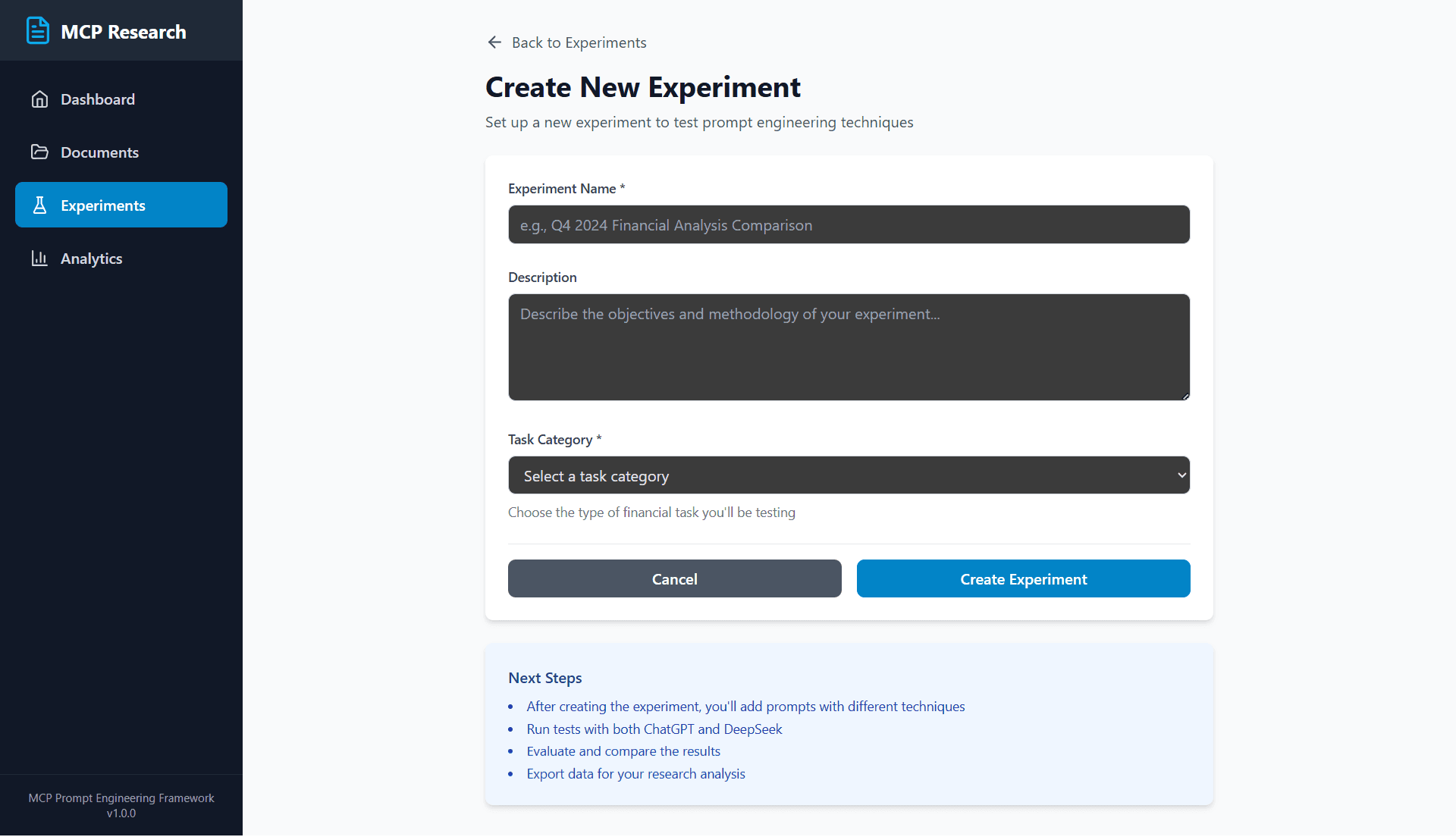
- •Experiment Management System: Create, version, execute, and track experiments with detailed history and timestamps.
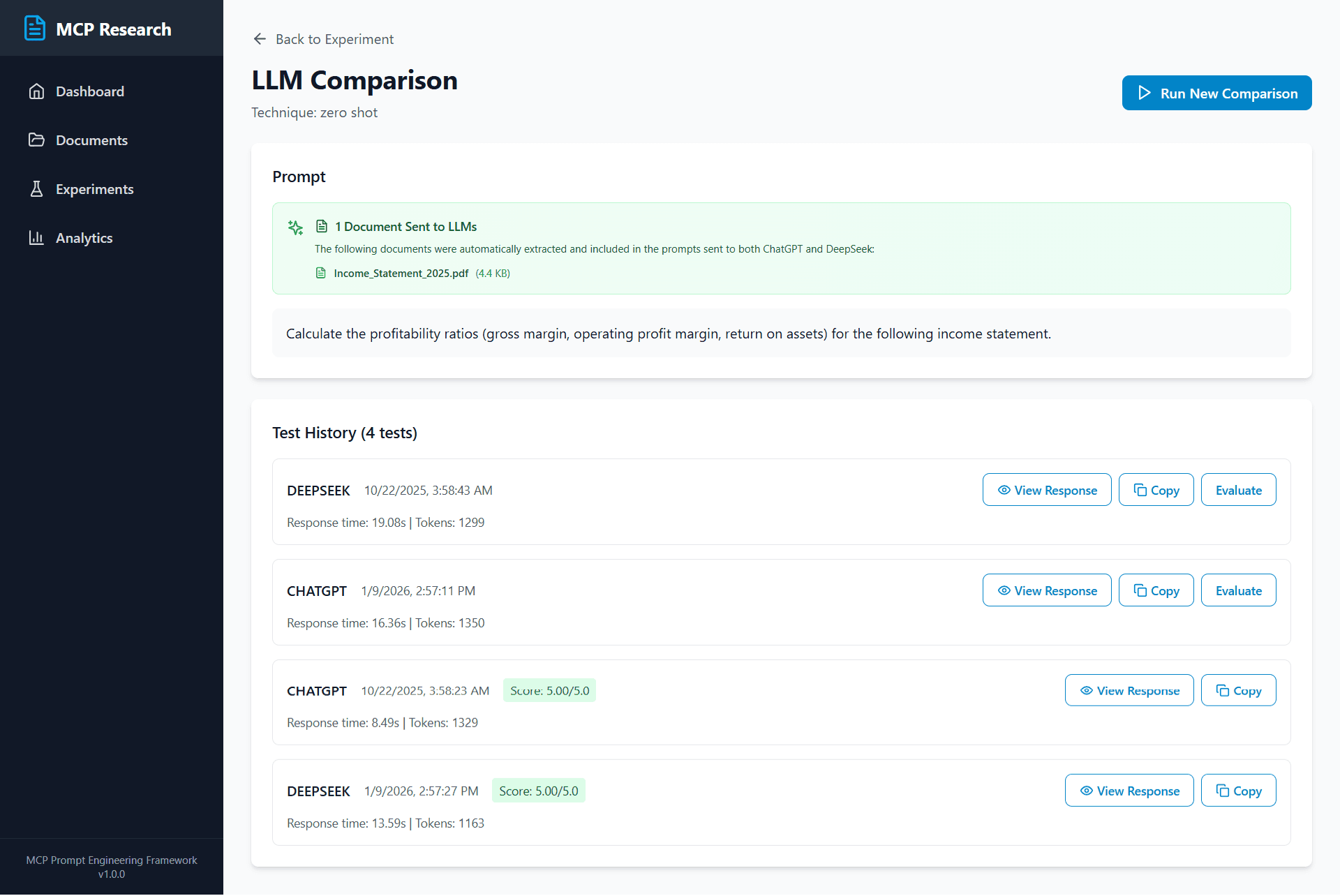
- •Quantitative Evaluation Metrics: Tracks response latency, token usage, completion statistics, and cost analysis per model and prompt.
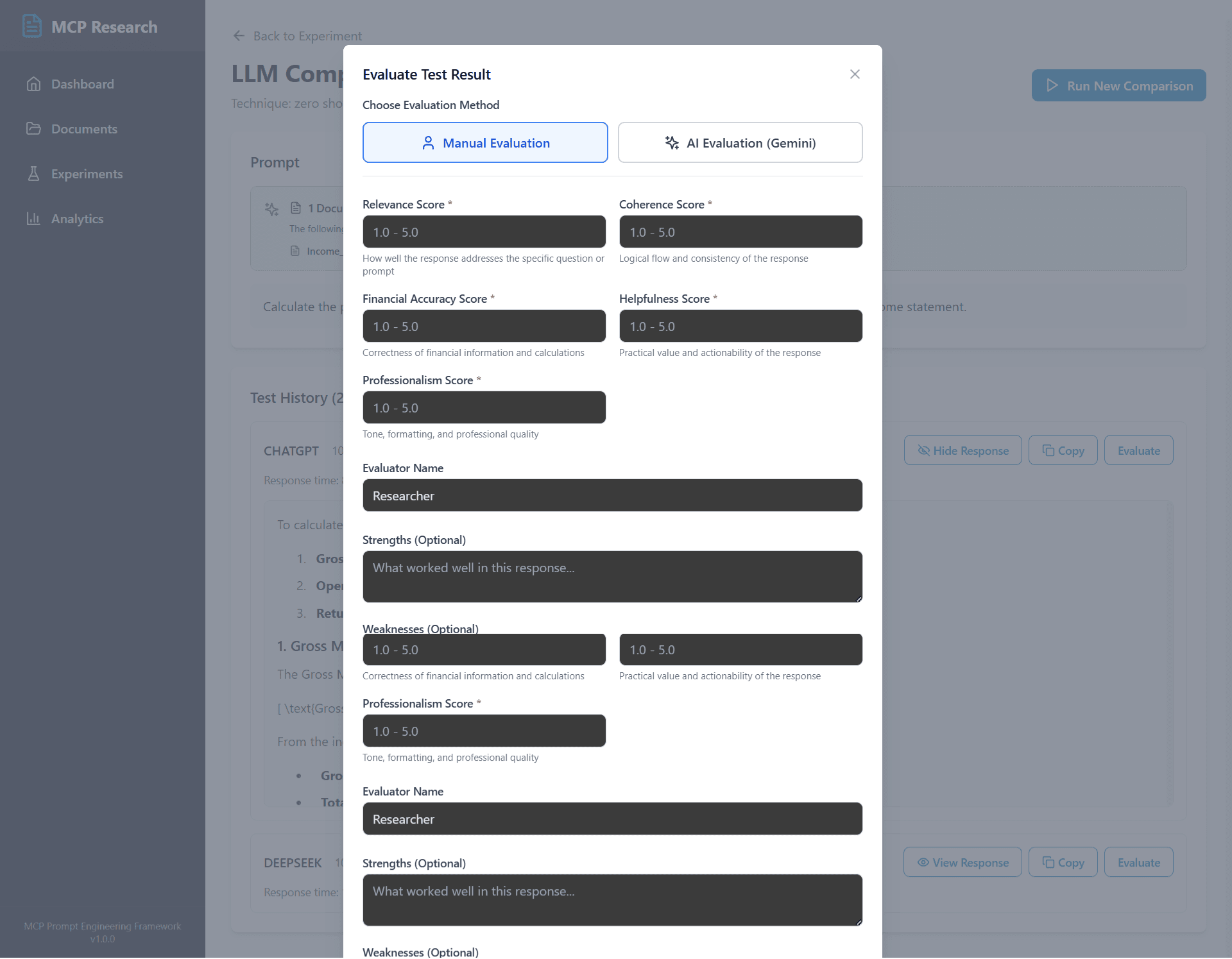
- •Qualitative Evaluation Metrics: Scores relevance, coherence, financial accuracy, and overall helpfulness using a structured 1–5 scale.
- •Multimodal Support: Upload and analyze text documents (PDF, DOCX, TXT, Markdown) and images (charts, graphs, financial visuals).
- •Automatic File Detection & Routing: Intelligent MIME-based detection to route files to appropriate processing pipelines.
- •Image Optimization & Compression: Efficient handling of large images (>20MB) for API transmission.
- •Financial Domain Task Support: Pre-configured workflows for financial analysis, risk assessment, investment insights, compliance, and reporting.
- •Interactive Analytics Dashboard: Real-time experiment monitoring with charts, comparisons, and performance insights.
- •Side-by-Side Model Comparison: Visual comparison of responses and metrics between LLM providers.
- •Data Export Functionality: Export experiment results and analytics in CSV and JSON formats for academic or business use.
- •Research-Grade Logging: Detailed result logging with timestamps, metadata, and evaluation traces.
- •RESTful API Design: 20+ well-structured endpoints supporting full CRUD operations.
- •Async & Scalable Backend: High-throughput FastAPI endpoints with efficient database connection pooling.
- •Secure & Maintainable Architecture: Clear separation of API, service, MCP, database, and utility layers.
- •Responsive Frontend UI: Desktop- and tablet-optimized interface with Tailwind CSS styling.
- •Real-Time Progress Tracking: Visual indicators for experiment execution and result availability.
- •Google Drive Integration: File upload and management support for document handling.
...and many more, including code architecture and reusability